
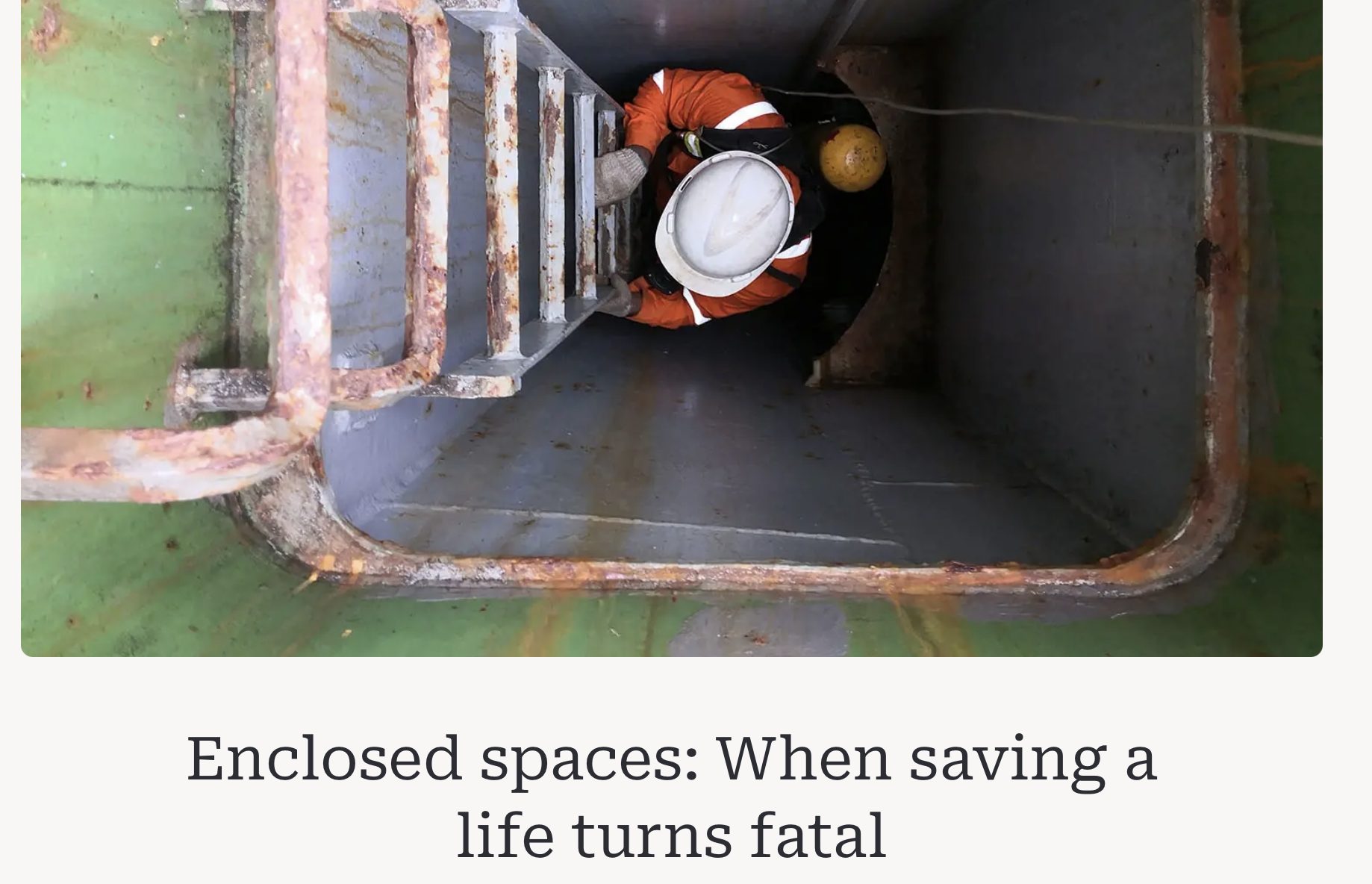
Enclosed spaces: When saving a life turns fatal
Enclosed spaces on ships - such as cargo tanks, holds, and chain lockers - are among the most dangerous environments onboard. While much attention is paid to the initial victims of asphyxiation or toxic exposure, a significant and tragic share of fatalities are would-be rescuers: crew members who rush in to save a colleague, only to become victims themselves.
Concerningly, the majority of multi-fatality incidents in enclosed spaces involve at least one rescuer who perished after entering without proper precautions.
The numbers speak for themselves
Many fatalities involve would-be rescuers - individuals who entered enclosed spaces to save others and became casualties themselves. According to NIOSH, more than 60% of confined space deaths occur among rescuers. IBTA’s analysis submitted to the IMO shows that between 2000 and 2024, there were 67 such fatalities on ships - 48 were crew members and 19 were shore workers. Senior officers (masters, chief officers, chief engineers) are disproportionately represented among rescuer fatalities; for example, nearly half of the 23 masters who died in enclosed spaces lost their lives in rescue attempts.
Published by Gard.

OceanGen Media is not affiliated, associated, endorsed by, or in any way connected with the publisher or rights holder of this content. The publisher’s logo is used solely for the purpose of identifying the original source of the material. Its inclusion does not imply any partnership, sponsorship, approval, or involvement by the publisher of OceanGen Media, nor does it grant OceanGen Media any rights, claims, or interests in the content. OceanGen Media did not participate in the creation, editing, or production of the content and asserts no ownership or control over it.
By completing this form, you may be redirected to the publisher’s official website or platform to access or purchase the original content.